
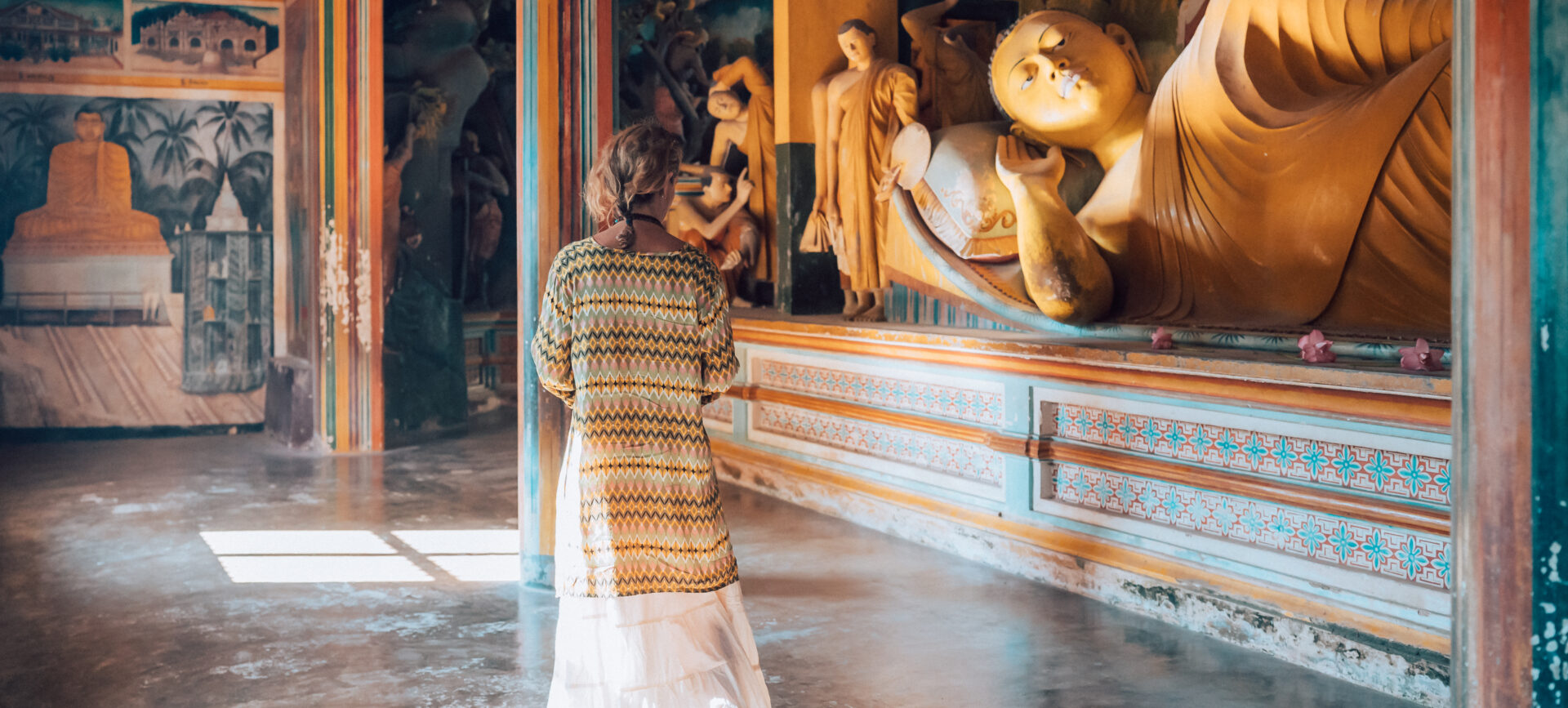
Galle Fort
A visit to Galle Fort is a must during your stay. This UNESCO World Heritage site is a beautiful 18th-century Dutch walled town, filled with colonial buildings, tropical sights, tiny cobbled streets, boutique shops and galleries. It’s lost some of its wonderfully dilapidated charm as tourism has grown, but it remains a fascinating place to spend a day.
Wander the ramparts from the lighthouse to the great entrance arches, stopping to explore the old town along the way.
If you’d like to get under the skin of Galle Fort, we highly recommend spending a few hours with our resident guide. As you walk the ramparts and winding lanes, they’ll bring centuries of history and legend to life, introducing you to the different communities and settlers who have shaped this remarkable place – as well as the people who live here today.
Useful info: The history tour runs at 8am or 3pm and must be booked ahead.
Distance from Meda Gedara: 65 minutes by car, or around 2 hours by local train from Matara.

Sooriya Weaving Handloom, Galle
Just outside Galle, Sooriya Handloom is a community-run workshop preserving Sri Lanka’s traditional handloom weaving. Local women use age-old techniques to create colourful textiles, from sarongs to homewares.
It’s a lovely family experience: watch the weavers at work, learn about the craft and its history, and support the artisans keeping this tradition alive.
Dikwella Temple
A spectacular temple with the largest seated Buddha in Sri Lanka. This is a gem of an experience, particularly if you’re lucky enough to catch the school children practicing their dancing during Sunday school. The hike to the top of the statue is also a great way to get the legs moving and build up an appetite.
Distance from Meda Gedara: 3 kms and 6 minutes by tuk tuk.


Mulkirigala Temple
One of southern Sri Lanka’s absolute must-sees, this extraordinary temple is both a spiritual delight and a workout to get to the top to see the view all the way across the southern lowlands.
Once you’ve clambered up to the top you’ll appreciate how this rock temple combines the wow of Sigariya and the artistry and history of Dambulla Caves – only with fewer crowds.
Distance from Meda Gedara: 45 mins by car or included in the bike ride adventure.

Dondra Head (Devinuwara) Temple
This impressive temple is one of Sri Lanka’s most important shrines to Vishnu, who is traditionally regarded as a guardian of the island.
It sits in Devinuwara, meaning ‘City of Gods’, a place of pilgrimage for centuries. Beyond its peaceful coastal setting, the temple offers a fascinating glimpse into Sri Lanka’s spiritual and cultural history.
Distance from Meda Gedara: 20 minutes by car.

Bandaramulla Temple
Keep an eye out for Bandaramulla Temple, a small Buddhist shrine tucked beside the road near the turning for Turtle Point. It’s easy to miss, but this peaceful local temple offers a quiet glimpse of everyday Buddhist life away from Sri Lanka’s better-known sights.
Temples and shrines: Ideally cover your shoulders and knees, you will be asked to take your shoes off to enter.
Stilt fishermen
Sri Lanka’s famous stilt fishermen perch on slender wooden poles just offshore, fishing with hand lines as the waves roll beneath them. The tradition dates back to the mid 20th century and is particularly associated with the southern coast around Weligama, Koggala and Ahangama.
Fewer fishermen rely on stilt fishing as a livelihood today, but it remains a distinctive part of the southern coast and a fascinating glimpse into Sri Lanka’s fishing traditions.
Useful info: You’ll generally find stilt fishermen in the shallow waters between Weligama and Ahangama. If you take photographs, please offer payment respectfully.

Hiriketiya Bay
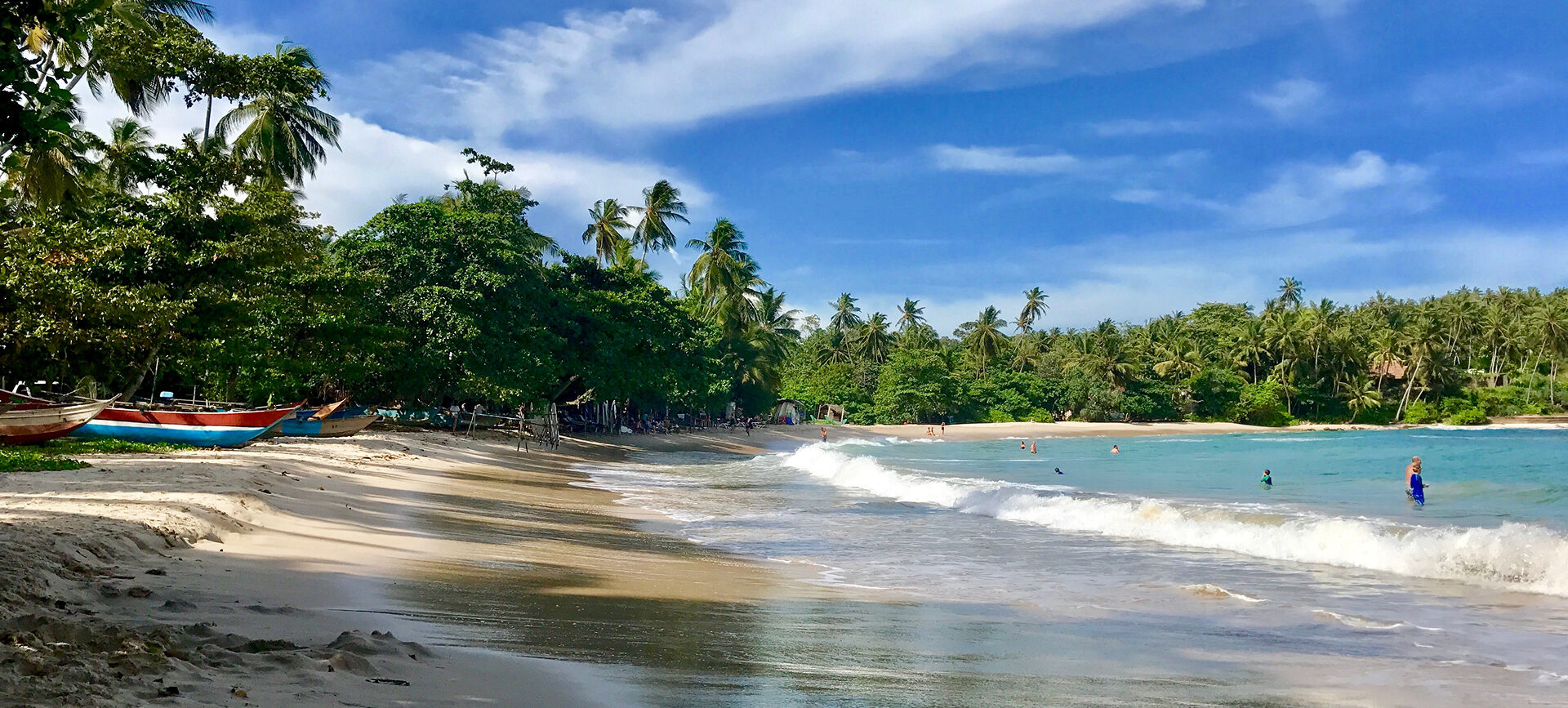
A few years ago, this was little more than a stretch of golden sand. Now it’s a lively spot, drawing surfers and people-watchers to its horseshoe-shaped bay.
There are plenty of good restaurants, a few remaining beach bars, palm-tree swings and surfboards to hire – all adding to its easygoing, beachy atmosphere.
Distance from Meda Gedara: 10 minutes by tuk tuk.
Mawella Lake punting experience
A lovely way to spend an evening is to board a traditional raft and glide across the lagoon as the sun sets. Listen to the calls of birds, bats and frogs while your boatman gently punts across the water, with drinks and nibbles to enjoy along the way.
Back at the dock, take a quick tour of the spice garden before finishing at the Ayurvedic herbal shop, where you can browse traditional remedies and balms.
Distance from Meda Gedara: 20 minutes by tuk tuk.


Kalametiya Lagoon Bird Sanctauary

This is a wonderfully peaceful few hours, whether you go in the morning or evening. Drift through the waterways by raft, watching water buffalo swim back to their island and birds feeding along the banks.
Then disembark and climb the huge rocks for sweeping views across the coast and inland jungle. A simple, immersive way to experience Sri Lanka’s quieter side.
Distance from Meda Gedara: 45 minutes by car.


Safari Experience
Sri Lanka’s south coast is surrounded by some of the island’s best national parks and wildlife reserves, including Yala, Udawalawe, Bundala, Lunugamvehera, Kumana and Sinharaja. Depending on where you go, you might spot leopards, sloth bears, elephants and an extraordinary variety of birds.
Safaris take place in 4×4 jeeps, with groups of up to six people per vehicle. Larger groups of up to 18 can travel together by minibus to the park before splitting into separate safari jeeps. There are designated spots for picnic breakfasts and sundowners along the way.
From Meda Gedara, we recommend a morning safari at Yala National Park (Blocks I or V), leaving at 5am and returning around 2pm. For Udawalawe National Park, an afternoon safari works well, leaving at 12pm and returning around 8pm.


Conservation-led Safari Experience
No roaring jeeps, aggressive driving or feeding the animals. This is a safari built around observing wildlife respectfully and in its natural environment.
Lunugamvehera National Park is one of Sri Lanka’s quieter places to see elephants, crocodiles and jungle fowl, with the chance of spotting the elusive leopard. You’ll be accompanied by Dr Weli, a passionate botanist and zoologist with a PhD, who acts as both tracker and guide.
It’s a slower, more thoughtful way to experience Sri Lanka’s wildlife – and a fascinating insight into the park’s wider ecosystem.
Useful info: park entry: 6am or 2pm.

The Sinharaja Forest Reserve
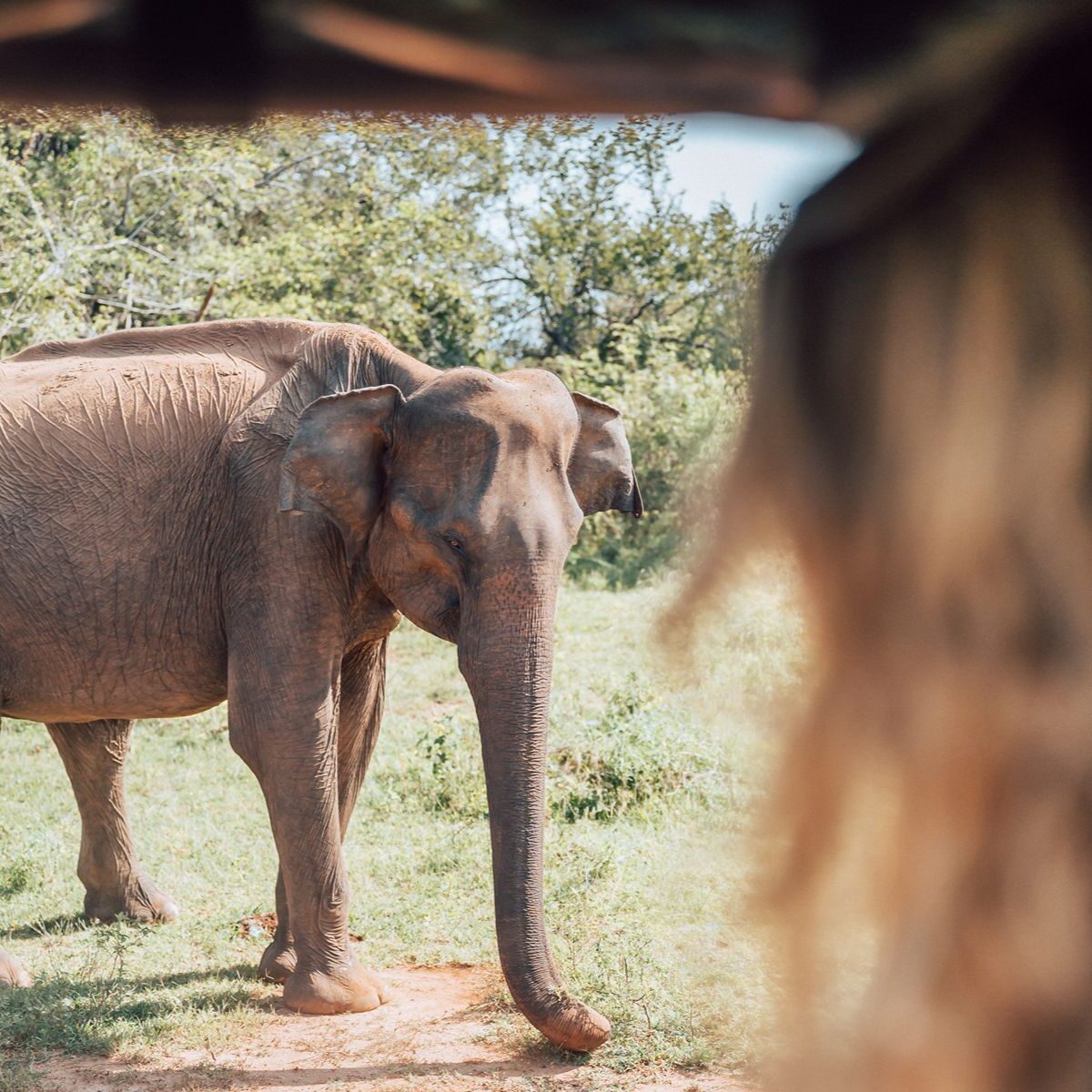
Sinharaja is one of Sri Lanka’s most important protected forests and a UNESCO World Heritage Site. This ancient rainforest is exceptionally rich in wildlife, from endemic birds and reptiles to insects, amphibians and mammals.
It’s also home to an elusive population of leopards and one of the last remaining populations of wild elephants in Sri Lanka’s Wet Zone. Beyond the wildlife, the forest is filled with streams, waterfalls and other natural features that make exploring it on foot particularly rewarding.
Sinharaja is also recognised internationally as a Biosphere Reserve and an Important Bird and Biodiversity Area, reflecting its extraordinary ecological importance. For those of you who like to get out and about we have a guide to adventure experiences here.
The Kanneliya Forest Reserve
Kanneliya is one of Sri Lanka’s most important rainforest reserves and a rewarding place to explore for anyone interested in wildlife and nature. The forest is particularly rich in endemic birds, reptiles, amphibians and freshwater species, while its streams, waterfalls and rock formations add plenty to discover along the way.
Leopards still live in the forest, although they are rarely seen and little is known about their movements and behaviour. Kanneliya is also recognised internationally as a Man and the Biosphere Reserve, reflecting its importance as part of Sri Lanka’s unique rainforest ecosystem.
Telijjawila Snake Farm
Hidden in the village of Telijjawila, around 35km from Galle, this family-run snake farm combines conservation, traditional knowledge and a touch of adventure. Run by an Ayurvedic family for generations, the farm rescues local snakes – from vine snakes and cobras to pythons – before releasing them back into the wild.
You can safely see the snakes handled by experienced experts, learn about Sri Lanka’s native species and discover traditional approaches to treating snakebites. It’s an unusual and fascinating way to learn more about the island’s reptiles.
Distance from Meda Gedara: 45 minutes by car.
Dondra Lighthouse
The small town of Dondra is home to Dondra Head Lighthouse, built by the British in 1889. Standing 54 metres high, it’s still in operation today, guiding ships around Sri Lanka’s southernmost point.
The lighthouse sits in beautifully maintained gardens, with sweeping views from the top. If you’re up for the climb, there are 196 steps to reach it.
Distance from Meda Gedara: 15 minutes by car.
Hoo-maniya Blow Hole
Hoo-maniya is a natural blow hole where waves force seawater through a rock opening, sending it high into the air. The height of the spray depends on the tide and wind, and can reach up to 100 feet, so go around high tide on a windy day for the best chance of seeing it at its most impressive.
There’s an entrance fee for foreign visitors and a modern visitor centre. From there, it’s a short climb up the cliff to the viewing platform.
Distance from Meda Gedara: 25 minutes by car.
Star Fort
Star Fort is a compact example of Dutch military architecture, giving a good insight into how the colonial forts around Sri Lanka were designed and built. It’s remarkably well preserved and well worth a visit if you’re interested in the island’s history and archaeology.
Leave about 40 minutes to give yourself enough time to investigate the mechanics of the drawbridge.

Tea plantations & estates
Sri Lanka’s tea story dates back to the 19th century, when James Taylor first commercialised tea on the island. For a closer look at the country’s tea heritage, we recommend two very different estates: AMBA Estate and Handunugoda Tea Estate.


AMBA Estate
This large estate in Uva Province is built around a simple idea: using the land to create jobs and a sustainable income for the local community. On a day trip, you can see how its award-winning tea is produced, alongside coffee, lemongrass, cinnamon, essential oils and much of the food served in its guesthouses.
It’s a fascinating, hands-on look at a different approach to farming and hospitality, set in one of Sri Lanka’s most beautiful valleys.
Distance from Meda Gedara: 2 hours by car.
Kumbuk Community Centre, Ahangama
Around 45 minutes from Meda Gedara, Kumbuk Community Centre brings together a café, arts space and traditional garden, with cooking lessons held in its open-air kitchen. It’s a chance to spend a few hours immersed in a slower, more traditional side of Sri Lankan life, with experiences centred around local plants, food, nature and community.
The centre takes its name from the Kumbuk tree, which is traditionally planted around wells and waterways for its natural ability to help filter and purify water. Its approach is similarly rooted in the relationship between people and the natural environment, with a focus on traditional knowledge, sustainable living and reconnecting with nature.
Contact Naveen Lakshan +94 76 001 3923. Kumbuk’s Instagram page.

