
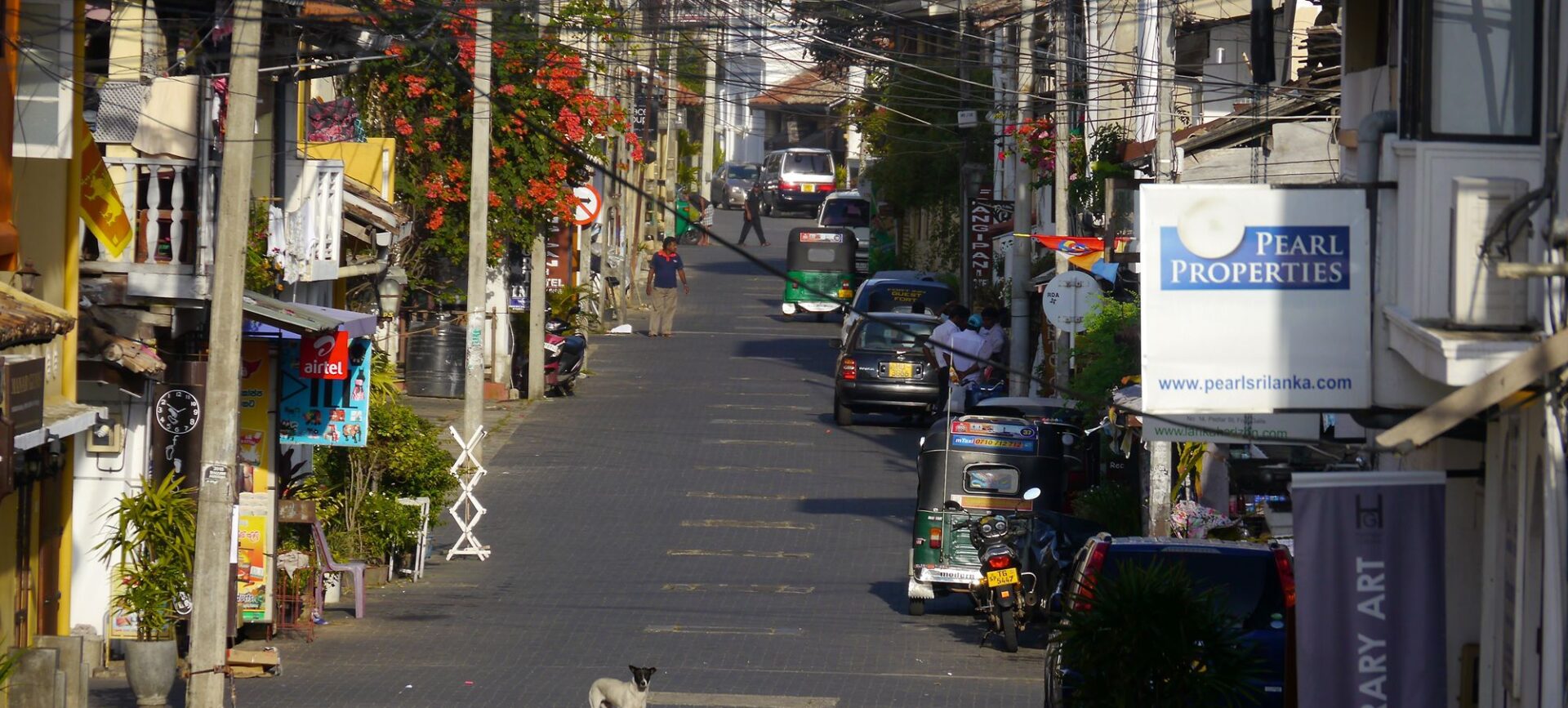
Just an hour’s drive from Meda Gedara, Galle Fort is the south coast’s essential day trip – and one of the few big sights in Sri Lanka where history hasn’t been roped off behind glass. It’s still a living town.
Families hang washing from colonial balconies, monks and priests share the same square, and fishermen still leap from the same ramparts the Dutch built to keep them out.
Why visit?
The Portuguese built the first fortifications here in the 16th century; the Dutch rebuilt and expanded them into the walled city you see today. Don’t be fooled by the name – Galle Fort isn’t a single building you tour and leave, but a whole walled town, still lived in today, with the fortifications simply wrapped around it.
UNESCO listed it for good reason – this is the best-preserved example of a European fortress town in Asia, and unlike most heritage sites, it never stopped being used. Cobbled lanes, courtyard cafés, converted merchant villas, working churches, mosques and a temple all sit inside 90 acres of 17th-century wall. Give it half a day, ideally ending at sunset.

What not to miss
The ramparts. Walk the full loop if you can – roughly 3km, and free. The very best way to experience Galle Fort is simply to wander, particularly in the late afternoon when the ocean breeze arrives and locals gather to watch the sunset from the walls.
Flag Rock Bastion. The southern tip of the walls and the fort’s unofficial sunset amphitheatre. Local boys cliff-jump into the surf below for tips – not a staged show, just what happens most evenings.
The lighthouse. Sri Lanka’s oldest, and the classic postcard shot – white tower against palm trees and battered stone. You can’t go inside, but the walk up is worth it alone.
Dutch Reformed Church. Beautifully preserved, with a floor made from gravestones repurposed from the old Dutch cemetery – look down as much as up.
Galle International Cricket Stadium. One of the most scenic Test grounds in the world, wedged between the ramparts and the ocean. If a match is on, even a walk past the boundary wall is worth the diversion.
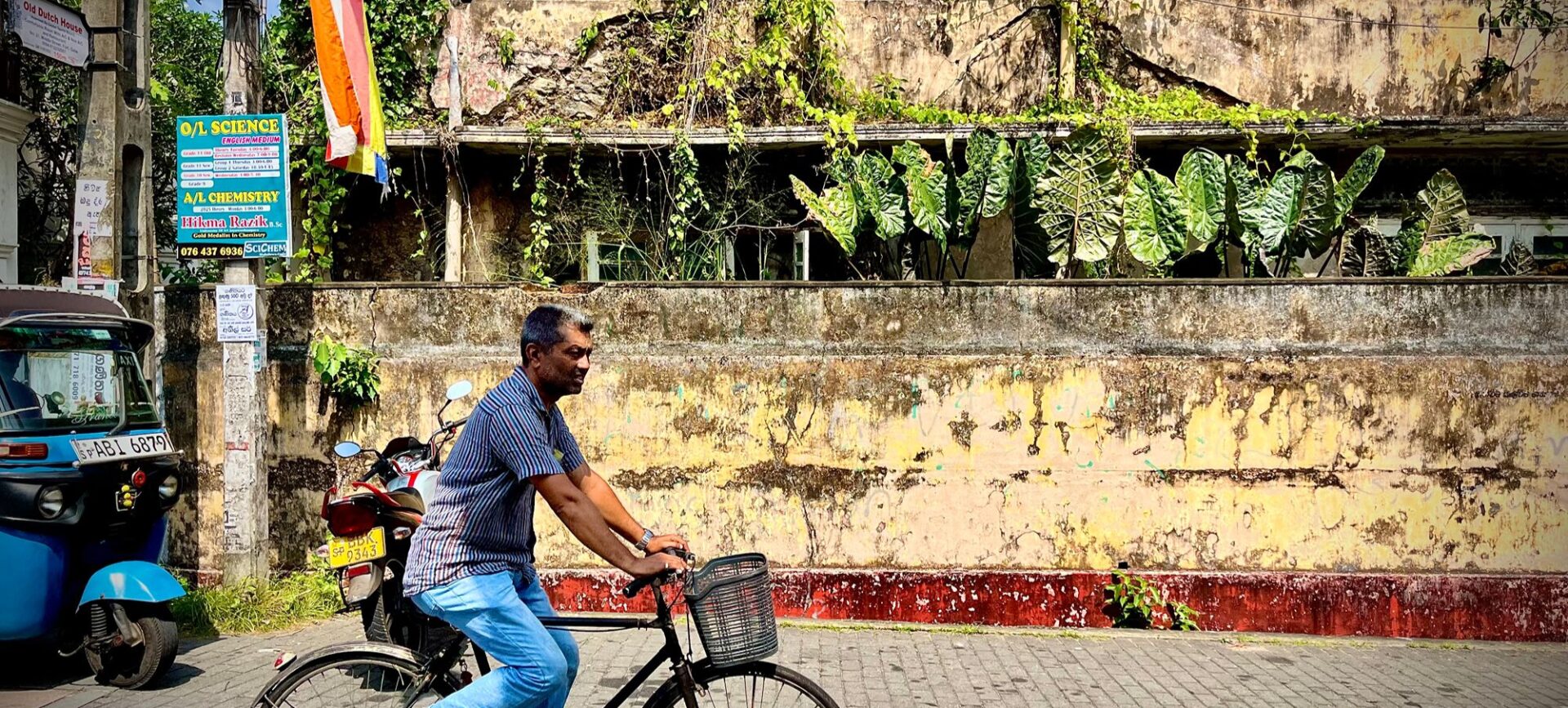
The back lanes. Skip the main tourist streets occasionally and wander Church Street, Parawa Street or Rampart Street instead – hidden courtyards, peeling colonial villas half-swallowed by frangipani, and doorways that open onto galleries no bigger than a living room.

Local flavour: things guests remember
- The call to prayer drifting over the rooftops at dusk, answered a few streets later by church bells.
- Fresh king coconut or wood-apple juice, drunk in a shaded courtyard out of the midday sun.
- Old men playing cards on the ramparts as if the tourists aren’t there.
- The way the light turns gold on the stone walls in the last hour before sunset – arguably the best free photograph in Sri Lanka.
- Cats. Galle Fort has an enormous, well-fed, entirely unbothered street cat population, and most cafés have adopted at least one.
Where to eat
Galle Fort punches well above its weight for food – a mix of Sri Lankan classics, colonial-era cafés and genuinely excellent international kitchens, all inside the walls.
- Church Street Social (Fort Bazaar Hotel) – famous for hoppers with spicy chicken curry, and a relaxed veranda for people-watching.
- The Tuna & The Crab (Old Dutch Hospital) – chef Dharshan Munidasa’s Sri Lankan seafood meets Japanese technique. The black pepper crab is the dish to order.
- The Arch – an elegant, seafood-led restaurant in a converted Dutch building; good for a proper sit-down dinner. Not the place for vegetarians.
- Aqua Forte – Sri Lanka’s most decorated Italian restaurant, run by an Italian chef importing ingredients from home. Book the veranda table if you can.
- Pedlar’s Inn Café – reliable, all-day, a good fallback for a relaxed lunch of Sri Lankan and Western classics.
- Isle of Gelato (Pedlar Street) – proper artisanal gelato, including excellent coconut and cashew flavours, for when the heat wins.
- Coconut Sambol / Lucky Fort – for an authentic, no-frills rice-and-curry buffet lunch at a fraction of the more formal restaurants prices.
Booking ahead is worth it for dinner in high season (December–April), especially for sea-view tables.
Parking
Cars aren’t allowed to roam freely inside the fort walls, and space inside is genuinely tight – most visitors park just outside the main entrance, near the old bus station and Old Gate, where informal car parks charge a few hundred rupees for the day. If you’ve been driven, the simplest option is to have your driver drop you at the entrance and either wait outside or arrange a pickup time – the fort is compact enough that everything is walkable once you’re in. Wear proper shoes; the cobbles are uneven and unforgiving in flip-flops. For more information about getting around southern Sri Lanka see our guide.
Good to know
- Entry is free. Individual sites inside – churches, museums – may charge a small fee.
- Best time to go: late afternoon into sunset. Midday sun on stone streets is brutal; December–April is the driest season but also the busiest.
- It’s a real neighbourhood. Many of the villas and houses are private homes – always ask before photographing residents or their doorways.
- Bring cash. Small cafés and street vendors don’t always take cards.
Travel a little deeper
If you’re staying at Meda Gedara and want the history properly unpacked – the sieges, the trade routes, the architecture hidden in plain sight – we can arrange a walking tour with our excellent local guide, Naveen, who brings four centuries of Galle to life far better than any plaque on a wall.

